Blog


What a Failing AI Visibility Score Actually Looks Like (And How We Fixed It)
We've mentioned the number a few times now: 24 out of 100. It's the AI visibility score a European health and beauty Shopify brand got the first time we ran geo-flow on their store. We've used it as a headline stat in a few places. This is the version with the actual detail behind it — what a score that low looks like up close, and what closing that gap actually involved.
What 24/100 looked like in practice
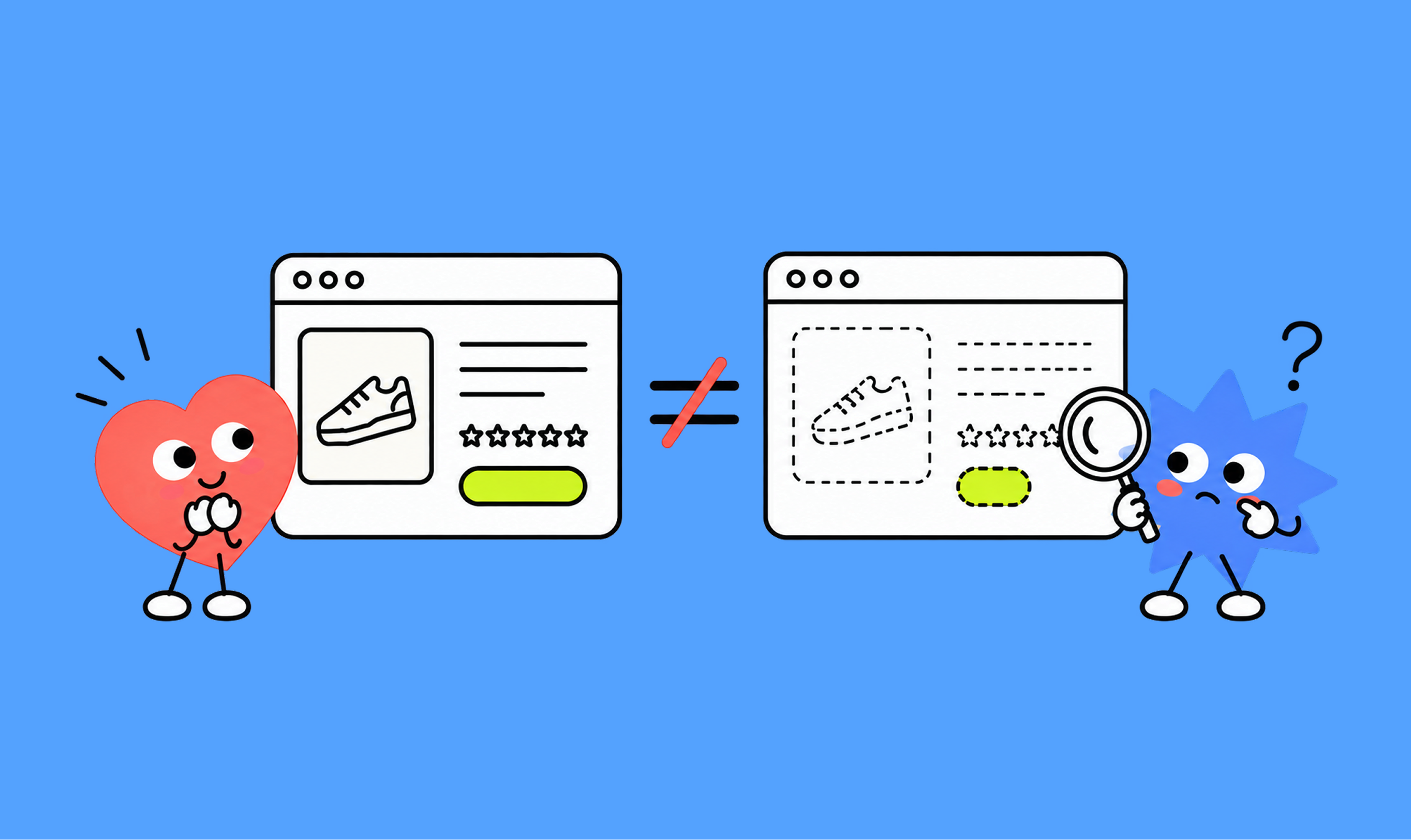
The store wasn't broken. Pages loaded, checkout worked, the design was clean, reviews were genuinely good. To a shopper, nothing was obviously wrong. To an AI assistant reading the same pages, most of it wasn't there.
Three things drove the score down specifically:
- No defined business identity in structured data — the site never stated, in a way a machine could parse, who the company was, what it sold, or why it was trustworthy. A human infers that from design and copy. An AI assistant needs it stated in schema.
- Best-selling product facts weren't machine-readable — materials, sizing, ingredients, compatibility, the details a shopper actually decides on, existed as descriptive paragraphs, not structured data an assistant could extract and cite with confidence.
- Return and shipping policy existed, but wasn't verifiable — the policy page was live and linked in the footer, it just wasn't marked up in a way that let an AI system confirm what it said without a human reading it directly.
None of these are design problems. None of them would show up in a Google Search Console report, a Lighthouse score, or a typical SEO audit. They're specifically about whether the facts on the page are legible to a machine, not just true.
 What actually got fixed
The work wasn't a redesign, and it wasn't a rewrite of any customer-facing content. It was making the same real facts machine-readable:
- Business identity markup (JSON-LD) covering who the company is, what it sells, and the trust signals that were previously only implied by design.
- Richer product schema on the highest-traffic and best-selling pages first, not the entire catalog at once, prioritized by what actually drives purchase decisions.
- Policy markup that lets an AI system verify shipping and return terms without guessing or skipping the page entirely.
That prioritization mattered. Fixing the entire catalog's schema at once is a big project. Fixing the pages that actually drive AI-assisted purchase decisions first is a fast one, and it's where the score, and the visibility, moved first.
What changed after
The rescan showed the gap closing where we'd targeted it: business identity resolved, priority product pages now returning structured, citable facts, policies verifiable instead of merely present. The full catalog rollout continued after that as an ongoing project, not a blocker to the initial fix.
The broader point isn't the score itself. It's that a store can look completely normal and still be functionally invisible to a growing share of how people discover products now — and that gap is fixable in weeks once you know exactly where it is, not months, and not with a redesign.

Where to start
If you don't know your own number, that's the first thing worth finding out, not guessing at. Run a free geo-flow snapshot on your store and see your actual AI visibility score in about two minutes, or book a 20-minute call if you'd rather walk through what a fix would actually involve for your catalog specifically.
You May Also Like
%20opt2.webp&w=1920&q=100)
What It Takes to Integrate with a Federal Reporting System: Lessons from Building NERIS Compliance for Fire Departments
Read more
Why Your Contact Form Is Losing You Customers (And How to Fix It)
Read more
White-Label Web Development: How Agencies Scale Without Hiring (Or Burning Out Their Team)
Read moreWrite to us